THE SPIRIT OF THE EARTH

Als ich vor sechs Jahren meine kleine Agentur für Grafikdesign startete, war ich vor allem eine Person: die Gestalterin, die Buchhalterin, die Kundenbetreuerin und die Putzkraft. Mein größter Luxus war es damals, morgens zehn Minuten in Ruhe einen Kaffee zu trinken. Dieses kleine Ritual verschwand schnell in einem Strudel aus Rechnungen, Dateiordnern und E-Mail-Verfolgungen. Die Arbeit war da, aber die Freude daran und die Kontrolle darüber gingen verloren. Ich verwaltete Papierkram, anstatt kreative Lösungen zu finden. Das änderte sich nicht durch ein teures Softwarepaket, sondern durch die Einsicht, dass ich meine wiederkehrenden Aufgaben standardisieren und automatisieren musste.

Der Wendepunkt kam, als ich für einen wiederkehrenden Social-Media-Beitrag eines Kunden zum dritten Mal in einem Quartal nach der korrekten Rechnungsvorlage suchen und sie manuell anpassen musste. Ich hasste diese Unterbrechung. Sie fraß Energie und Zeit. Also begann ich, jeden Schritt zu dokumentieren, der immer gleich blieb – vom Vertragsentwurf über die Rechnungsstellung bis zur Dateiablage. Die Suche nach einem Tool, das genau diese Standardisierung einfach umsetzt, führte mich zu einer Plattform für Vertrags- und Dokumentenautomatisierung. Für meine Zwecke fand ich wittendeel.com besonders passend. Es ging nie darum, weniger zu arbeiten, sondern darum, den nervigen Kleinkram aus dem Weg zu räumen.

Der erste Automatisierungsschritt ist der schwierigste

Am Anfang stand Zettelwirtschaft. Ich schrieb alle Aufgaben einer typischen Kundenbetreuung auf, vom ersten Anruf bis zur finalen Rechnung. Das Ergebnis war ein fast lächerlich langer Zettel. Die Erkenntnis war aber nicht die Länge, sondern die Wiederholung. Ich machte bei jedem Projekt fast die gleichen zehn administrativen Schritte. Mein erster Automatisierungsversuch war simpel: Ich erstellte eine Textvorlage für mein Standardangebot. Das sparte mir vielleicht fünf Minuten pro Vorgang. Es fühlte sich aber wie ein großer Sieg an. Diese kleine Erleichterung gab mir den Mut, weiterzumachen.

Warum Standardisierung vor Automatisierung kommt

Man kann keinen Prozess automatisieren, den es nicht gibt. Das klingt offensichtlich, ist aber der häufigste Fehler. Ich dachte zuerst an die “intelligente” Software. Die Realität verlangte erst eine langweilige Entscheidung: Wie soll der Ablauf überhaupt aussehen? Ich musste mich festlegen. Welche Informationen brauche ich im Vertrag? Wann genau stelle ich die Rechnung? Wo speichere ich die fertigen Dateien? Ich entwickelte eine klare, schriftliche Routine. Diese Struktur war das eigentliche Fundament. Das digitale Tool danach war nur das Werkzeug, um sie einzuhalten, ohne dauernd nachdenken zu müssen.

Wie sich wieder freie Kapazitäten spürbar machen

Der Effekt war nicht sofort ein freier Nachmittag. Es waren kleine Gewinne. Plötzlich musste ich nicht mehr über den korrekten Betreff für die Projektabschlussmail nachdenken. Die Rechnung wurde automatisch zum Monatsende generiert und verschickt. Diese mentalen Mikroaufgaben summieren sich enorm. Nach einigen Wochen merkte ich, dass mein Kopf deutlich freier war. Ich konnte mich länger auf ein Design konzentrieren, ohne dass im Hinterkopf eine Erinnerung an eine ausstehende Zahlungserinnerung tickte. Freie Kapazität zeigt sich nicht in leeren Kalenderblöcken, sondern in einer ruhigeren Gedankenlage.

Die größte Hürde ist die eigene Gewohnheit

Die Technik war einfach. Die Gewohnheit zu brechen, war hart. Es fühlte sich anfangs sogar umständlich an, einen Vertrag über ein Formular auszufüllen, statt mein altes Word-Dokument zu öffnen und zu überschreiben. Mein Gehirn war auf den alten, chaotischen Weg programmiert. Ich musste mich aktiv zwingen, den neuen, standardisierten Weg zu gehen. Der Vorteil: Nachdem ich mich drei oder vier Mal durchgerungen hatte, wurde der neue Weg zur natürlichen Wahl. Er war ja tatsächlich einfacher und zuverlässiger. Der Automatismus entlastete mich, aber ich musigte ihn erst etablieren.

Welche Prozesse sich überhaupt lohnen

Nicht alles sollte man automatisieren. Das kreative Briefing mit dem Kunden? Auf keinen Fall. Das ist lebendige Arbeit. Ich konzentrierte mich auf die trockenen, fehleranfälligen Verwaltungsschritte, die bei jedem Projekt gleich waren. Meine einfache Checkliste half mir zu erkennen, was sich lohnt:

Die Rechnungsstellung traf auf alle Punkte zu. Die Gestaltung eines Logos auf keinen.

Vom Zeitgewinn zum Qualitätsgewinn

Der eigentliche Gewinn war am Ende nicht die gesparte Zeit. Es war die gewonnene Konsistenz und Professionalität. Jeder Kunde bekommt nun den gleichen, klaren Vertrag. Jede Rechnung sieht gleich aus und kommt pünktlich. Das hinterlässt einen zuverlässigen Eindruck. Früher hing die Qualität dieser administrativen Arbeit von meiner Tagesform ab. War ich gestresst, konnte ein Tippfehler in der Adresse passieren. Heute läuft das im Hintergrund zuverlässig ab. So kann ich meine Energie und meine “gute Form” in die Arbeit stecken, die wirklich einen Unterschied macht: das Design. Und ja, ich trinke meinen Morgenkaffee jetzt wieder meist in Ruhe aus.


THE SPIRIT OF THE EARTH

WINES

The Winery

Welcome to Rosha – a modern, welcoming wineryfounded in 2016 by passionate wine enthusiast andfilmmaker Sandro Jandieri, together with professionalwinemaker and Kvareli native, Tengo Amonashvili. Nearlya decade later, our invitation to explore bold flavours,rich aromas, and deliver memorable experiencesremains as open as ever, or so we like to think.

Our dedication to nature and craftsmanship hasn’twavered. At the heart of everything we do is a pursuit ofbalance–something we’ve cherished since thebeginning and which continues to resonate with winelovers around the world. We’ve proudly grown ourinternational presence, with successful exports to theUnited States, the Netherlands, and France, where ourwines are featured in select Parisian wine bars andMichelin-starred restaurants. In 2023, we entered theAsian market with our first shipment to Japan.

What began as a small experimental project in a family-owned cellar has grown into a new chapter: a purpose-built new winery set to welcome its first harvest in 2025.Our marani (Georgian for “cellar”) is designed to feel likehome–a place to sip, savour, and discover the spirit ofRosha. We look forward to welcoming you to our cornerof the world. Gaumarjos!

QVEVRIS

Qvevri is a traditional clay vessel, typically buried or partially buried underground. The recentrevival of this ancient Georgian winemaking tradition–now embraced by vintnersworldwide–has reaffirmed what we have always believed: Qvevri is the finest and mostnatural vessel for fermentation and wine preservation. Grapes arecrushed and fermented in Qvevri, allowing the wine to maintain theearth’s natural temperature. While the traditional Kakhetianmethod                                          involves full skin contact, including stems,                                                        duringfermentation, we adapt this time-honoured                                                        practice to alignwith our winemaking vision.

We take great pride in our collection of the oldest Qvevris of various sizes – 17 in total, considered among the finest in Kakheti. This collection is the result of years of effort, gathering Qvevris from various sites, with one of the most revered dating back to the 11th century, as old as Alaverdi Cathedral. To honour the ancient Qvevri tradition, we never use wax to treat our vessels, a practice commonly adopted throughout Georgia and beyond. This approach allows our wine to have direct contact with the clay and derive its full benefits without any intermediary.

VINEYARDS

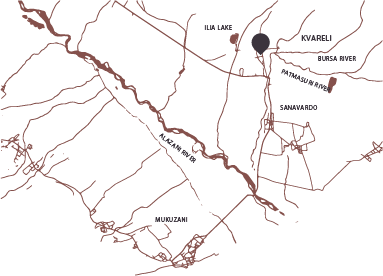
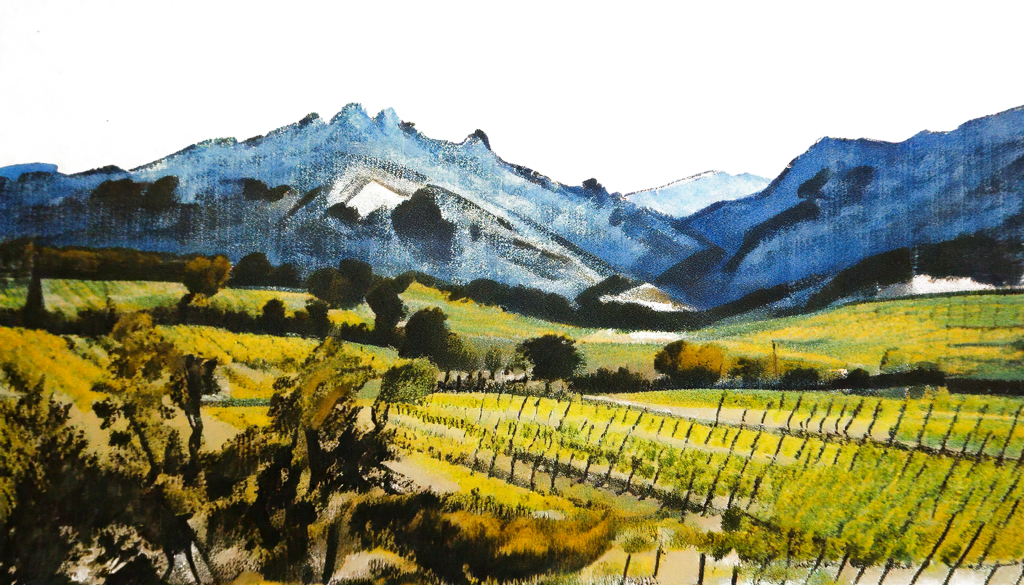
Nestled across 9 hectares at the foothills of the Kvareli Mountains and cradled by the Bursa and Duruji rivers, our vineyards flourish in a uniquely fertile and dynamic setting. The Kvareli Mountains offer natural protection and cool night-time temperatures, allowing grapes to ripen gradually, preserving their acidity and complexity. The rivers help moderate the climate–an increasingly vital factor amid rising summer temperatures due to global warming.

The soil here is predominantly alluvial and mineral-rich, composed of loamy sand with an abundance of rocks and river stones extending 100 to 150 centimetres deep. This excellent drainage enhances root development and supports wines with remarkable aromatic expression.

At 450 meters above sea level, with steady airflow from the Alazani Valley and ideal moisture levels, this harmonious terroir nurtures healthy vines and yields wines that are vibrant, expressive, and true to the distinct character of Kvareli–one of Georgia’s most fertile and storied winemaking regions.

COMMITMENT TO NATURAL PRACTICES

We follow the rigorous standards of Terra Vitis,embracing environmentally responsible practicesthroughout our production process.To protect and preserve the soil, we promote grassgrowth between vine rows, and we nourish the vinesusing vine shoot mulching, organic plant matter, andlime. Our commitment to preventative vineyard careincludes traditional methods such as ébourgeonnage(removing excess shoots) and effeuillage (removingolder leaves), which help maintain vine health andincrease leaf surface for optimal grape ripening.Alongside these sustainable measures, we remaindeeply rooted in our winemaking traditions. High-densityplanting ensures lower yields per vine (6 – 8 tonnes perhectare) enhancing quality. Attentive work in thevineyard keeps the grapes in excellent condition,allowing us to wait patiently for perfect ripeness beforeharvest. All of our grapes are picked by hand, ensuringcareful selection and preserving the integrity of eachbunch.

Visit Our contact page to book a visit an experience the natural beauty of our surroundings, the care behind our craft, and-of-course-our heartfelt  Georgian hospitality, which we cherish just as much as our winemakeing.

Contact

For general enquiries or to book a winery visit please complete the form below.

20 Demetre Tavdadebuli Street Kvareli 4800 Kakheti, Georgia

Terms & Conditions

Welcome to Rosha Winery’s website. By accessing or using our website, you agree to be bound
by the following terms and conditions

  1. Use of Website
    This site and its content are intended for individuals of legal drinking age in their respective
    countries. By using this site, you confirm that you are of legal age to purchase alcohol.
  2. Intellectual Property
    All content on this site—including text, images, logos, and designs—is the property of Rosha
    Winery and may not be used, copied, or distributed without our prior written permission
  3.  Product Availability
    Wine availability may vary based on vintage and production volume. We reserve the right to
    change prices and availability at any time without notice.
  4.  Winery Visits & Bookings
    Bookings for visits are subject to availability. Confirmation will be provided by email.
    Cancellations or changes must be communicated at least 24 hours in advance.
  5.  Limitation of Liability
    Rosha Winery shall not be held liable for any damages arising from the use or inability to use
    this website, including viruses or website interruptions.
  6.  External Links
    Our site may contain links to third-party websites. We are not responsible for their content or
    practices.

Privacy Policy

Rosha Winery respects your privacy and is committed to protecting your personal information.
1. Information We Collect
We collect only the information you voluntarily provide to us through forms (e.g., booking a visit
or subscribing to our newsletter), such as your name, email address, and contact details.
2. Use of Information
Your information is used solely to provide the services you request, including:
▪ Booking confirmation and follow-up

▪ Customer service communication
▪ Occasional updates about events or new wine releases (with your consent)
3. Data Sharing
We do not sell, rent, or share your personal data with third parties, except where required by law
or with trusted partners necessary to fulfil your requests (e.g., delivery services).
4. Cookies
Our website may use cookies to improve user experience. You may disable cookies through
your browser settings at any time.
5. Security
We implement appropriate technical and organisational measures to protect your personal data.
6. Your Rights
You have the right to access, correct, or delete your personal information at any time. To do so,
please contact us directly at: contact@rosha.ge

Vintage

2020

Tasting Notes

Download pdf

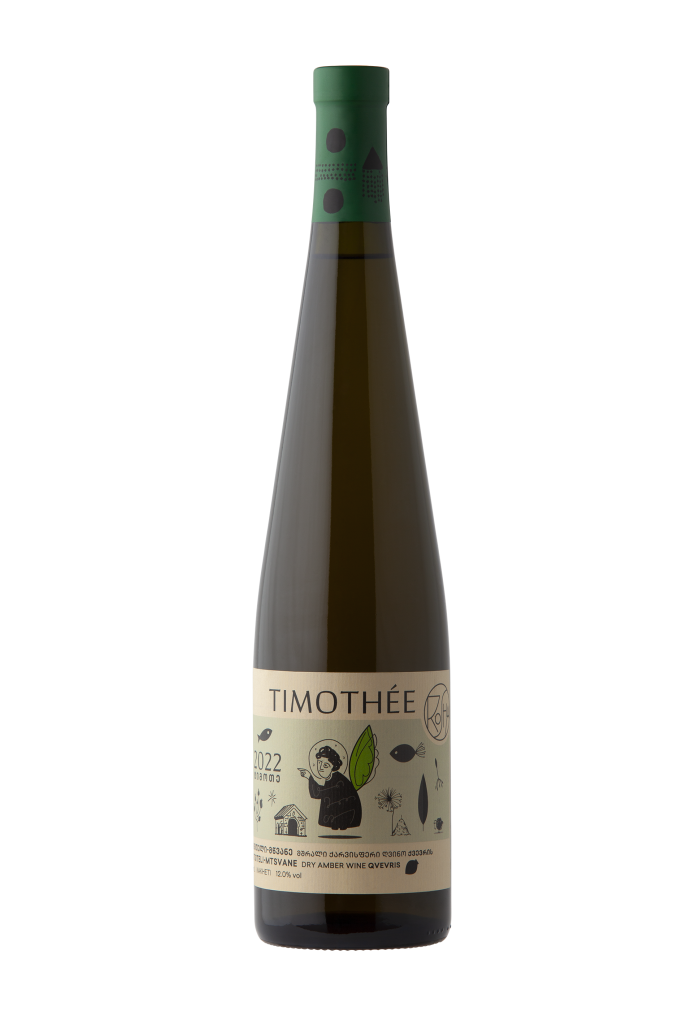
T I M O T H É E R K A T S I T E L I - M T S V A N E

TECHNICAL DATA

STYLE: DRY AMBER WINE GRAPE VARIETIES: RKATSITELI 70%, MTSVANE 30% APPELLATION: KVARELI, KAKHETI, GEORGIA ALCOHOL: 12.0% | ACIDITY: 4.0 | SUGAR: 0.9

VINEYARDS

ALTITUDE: 450 M.A.S.L. VINEYARD AGE: 50 YEARS HARVEST: MANUAL HARVEST

SOIL:

Alluvial, with predominate clay structure, double layer of rock and river stones as deep as 100 to 150 centimeters, with excellent drain, which permits vines to have an outstanding aromatic expression and floral notes.

WINEMAKING

VINIFIED IN “QVEVRI”: Traditional method in qvevri clay amphora. MACERATION: Up to 3 months SULFITES: Low addition after qvevri FILTRATION: Natural filtration. The sterilization filter is used in the bottling process.

OUTPUT: 3,000 Bottles

TASTING NOTES SIGHT: Pale Golden color NOSE: Apricot, Apricot, as well as fresh, young herbs PALATE: Vibrant acidity, light body and lengthy finish.

SERVING TEMPERATURE 11 – 12°C